|
 | ||||
| We are pleased to present our Spring 2010 Newsletter packed with company updates, new fabrication methods, and recently completed projects and photographs. Please visit COST's website for the very latest on these projects and many more. | In This Issue |
||||
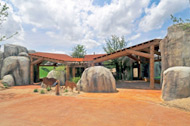
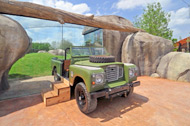
African Savanna, Phase II, Dallas Zoo The Dallas Zoo, Giants of the Savanna, opened Memorial Day weekend to much fanfare. This project is the largest at the Zoo in over 20 years. The $30 million Savanna was funded by a 2006 voter approved bond and private donations. The Giants of the Savanna area encompasses over 11 acres for both project phases. CLR was the exhibit designer for Phase I and II. COST was awarded the Phase II exhibits by Sedalco/Metalman JV. Our scope included artificial Kopje rock, required footings for rockwork, earth bank finishes, ponds and streams. There will also be water holes and mud pits, which will soon be an oasis for lions, cheetahs, giraffes and other African species. All of the work was constructed with a positive, hand carved shotcrete approach. Texture coats were integrally colored with accent colors and 'aging'. This artistic approach brings out a more realistic and natural finish in order to blend with natural stone. The project was built after COST provided stamped engineered shop drawings and scale models. The model, which detailed the exhibit finishes and coloration of theme surfaces, was approved by the owner and design team. |
Dallas Zoo
|
||||
|
|
||||
Cincinnati Zoo, Manatee Exhibit The manatee exhibit has always been and will continue to be a fan favorite at the Cincinnati Zoo. The zoo has had an excellent track record for its manatee release program. Recently, the zoo's beloved Slip and Little Joe were released back into the wild at Blue Spring State Park in Orange City, FL (www.cincinnatizoo.org). COST was contracted to build a new, more spacious manatee exhibit for their next manatee. While the existing concrete tank and acrylic glazing were structurally sound, the simulated habitat and the life support system were ready for updates. The renovation required a general contractor, MEP contractor and exhibit fabricator, COST of Wisconsin, Inc. The demolition and installation of the new life support system were completed prior to being turned over to COST artisans. Our staff erected reinforcing steel, attached lath and carved the concrete to create simulated rock and earth bank textures within the aquatic tank. The simulated rock was designed and fabricated in a way to allow for several manatee "resting" ledges. Natural logs were then set within the habitat. The new habitat provided greater water volume, better diver access and improved feeding locations. The enhanced decorative work allows for a more visually appealing exhibit and most importantly, it provides a better habitat for these marine mammals. |
Cincinnati Zoo 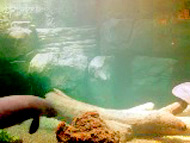 |
||||
Little Rock Zoo soon to show African Penguins new Home The Arkansas Zoological Foundation, the Little Rock Zoo, Carson & Associates Contracting, and COST of Wisconsin, Inc. are pleased to announce the start of the greatly anticipated African Penguin Exhibit. The Little Rock Zoo is proud to boast being one of the only exhibits in the country styled to imitate an African beach shoreline. Mark Robertson, principal of Little Rock based Mesa Landscape Architects, provided the design of this inspirational and entertaining exhibit which will soon be the home for 8 penguins this coming Fall. The highlights of the exhibit showcase both underwater and above water viewing areas. A shaded view structure takes the form of a shipwrecked boat's hull (see photograph). The hull was constructed of concrete finished with a wood texture. The face has a dilapidated, faded appearance to look as though it has been there for years. Rockwork along the exhibit includes a drinking fountain. Beyond the new and interesting features for patrons, the penguins get treated to a new environment as well. Large rockwork outcroppings include planter pockets, a beach-like shoreline and simulated logs. Zoo director Michael Blakely stated, "this is an exciting time for the Little Rock Zoo and we are just thrilled to start construction on the Laura P Nichols Penguin Pointe Exhibit". |
Little Rock Zoo, Shipwreck in fabrication 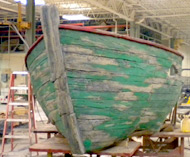 |
||||
Tech Forum Much like the simulated snow and ice we discussed in last quarter's Tech Forum, simulated trees and vines are constructed in a variety of ways and composed of numerous materials. Material selection is based upon the animal habitat, the required strength of the unit, structural weight limitations and other criteria. This tech forum will briefly identify a few materials used when fabricating trees, vines and roots such as Glass Fiber Reinforced Concrete (GFRC), fiberglass (FRP) and epoxy. GFRC logs and stumps are frequently utilized within habitats. While heavier than other materials, its durable properties can withstand harsh punishment from weather and inhabitants within the exhibits. The high density, cement mix with glass fibers cure to 6,000 PSI in 28 days. Logs, stumps, boulders and a host of other zoo furniture are all produced with this material. These highly detailed molded items are shipped and installed at exhibits all over the world. FRP is an excellent material choice when weight is a factor, or in areas where durability is less of a concern. While FRP is more costly than GFRC, its lightweight characteristics provide thematic features that are easy to move or hang from walls, ceilings, columns and beams. This is beneficial as FRP pieces reduce installation times and require less structural support. We often use FRP for large tree sections, branches, logs and deadfall. A common request is to develop FRP log wraps that cover structural steel columns or disguise HVAC and other architectural elements. Epoxy is commonly used when fabricating our simulated vines. Depending upon the species, vines can be constructed with a varying diameter rope or wire core. Once the core is determined for the specific habitat, it is covered with an epoxy to add texture to the vine. Finally, a topical paint is hand applied to create a highly realistic finish. Each material application and method is unique and specific for the species. If you would like to further discuss FRP, GFRC and epoxy products, please call us for assistance. |
Simulated Vines and Trees 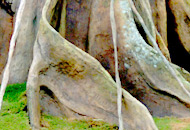 |
||||
The Short List, A Few Projects Underway
|
|||||
| For more information about any of our projects, contact: Christopher Foster, Seattle, WA at 888-567-2678 Jeffrey Sheiber, Orlando, FL at 800-221-7625 ext 2101 Glenn Barnard, Orlando, FL at 800-221-7625 ext 2104 John W. Hawkinson, Jackson, WI at 800-221-7625 ext 6033 http://www.costofwisconsin.com/ |
|||||